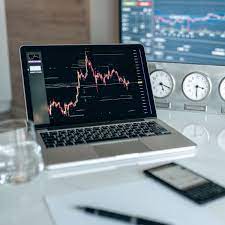
Proprietary trading desks, often heard of in the financial world, remain a fascinating yet complex aspect of market operations. These trading desks, commonly referred to as ” proprietary trading,” are divisions within financial institutions or firms that trade stocks, bonds, currencies, commodities, and other financial instruments using the firm’s own capital rather than client funds. Let’s unpack the mechanics of how these desks function and their pivotal role in the financial ecosystem.
Understanding Proprietary Trading
Unlike typical financial firms that earn through commissions on client trades, proprietary trading desks aim to generate profit directly for the company. By leveraging sophisticated strategies, proprietary traders seek to capitalize on market inefficiencies and trends to secure high returns. They engage in activities such as arbitrage, options trading, and algorithmic trading, deploying both manual expertise and advanced technological tools.
Strategies Utilized by Proprietary Trading Desks
Prop desks thrive on a diverse range of strategies designed to maximize returns. These include:
• Market Arbitrage
This involves exploiting price differences for a financial asset across different markets or instruments, ensuring profit from variations in pricing.
• High-Frequency Trading (HFT)
Using state-of-the-art algorithms, HFT enables rapid trading decisions, executing a high volume of trades within milliseconds to take advantage of short-lived opportunities.
• Directional Trading
This strategy is based on the proprietary desk’s predictions regarding market direction, such as betting on rising or falling prices of certain assets.
• Risk Arbitrage
Here, trades are made on mergers or acquisitions, betting on the price movements of involved companies.
Roles and Key Players
Proprietary trading desks rely on skilled professionals, including quantitative analysts, software developers, and experienced traders, who collaborate to refine strategies and boost profitability. Their tasks range from mathematical modeling and developing trading algorithms to executing trades and analyzing market data.
Why Proprietary Trading Matters
Proprietary trading desks serve as significant liquidity providers in the market. By actively buying and selling securities, they contribute to market efficiency and price discovery. Furthermore, their innovative strategies often push the boundaries of financial technology and analytics, setting trends for the broader industry.
Though intricate, proprietary trading desks showcase the symbiotic relationship between innovation and financial markets. Businesses that effectively operate these desks stand to gain not just profitability but also a competitive edge in influencing and shaping global financial dynamics. Understanding these inner workings opens a window into a world where precision, speed, and strategy converge to achieve success.