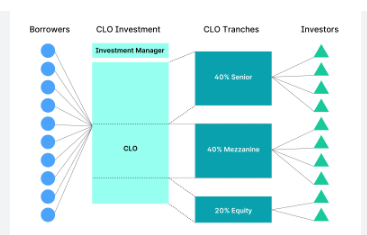
Collateralized Loan Obligation (CLO) equity investors play a crucial role in structured finance by providing the most junior tranche of capital in clo equity investors transactions. Unlike debt investors who receive fixed returns, equity investors assume the first layer of risk in exchange for the potential of higher rewards. Understanding who these investors are and what drives their decisions requires a closer look at both the structure of CLOs and the strategic objectives of equity participants.
CLO equity investors are typically sophisticated institutional investors, such as hedge funds, private equity firms, and specialized asset managers. These investors have a strong appetite for risk and a deep understanding of credit markets, as the equity tranche is exposed to the highest potential losses if underlying loans underperform. Individual investors rarely participate directly due to the complex nature and significant risk of CLO equity.
The primary motivation for investing in CLO equity is the opportunity for outsized returns. Since equity investors are last in line for repayment, they capture residual cash flows after all debt tranches have been serviced. This can result in attractive yields that often surpass traditional fixed-income investments, especially in periods of market stability. However, the potential for high returns is accompanied by heightened sensitivity to credit defaults, interest rate changes, and market volatility, making careful risk assessment essential.
Decision-making for CLO equity investors revolves around several key factors. First, the quality of the underlying loan portfolio is paramount. Investors evaluate the creditworthiness of the borrowers, diversification of industries, and the historical performance of similar loans. A well-diversified portfolio with lower default probabilities reduces potential losses and enhances expected returns.
Second, structural considerations of the CLO itself influence investment choices. Investors examine the tranche’s subordination level, reinvestment period, and coverage tests. These features determine how cash flows are allocated and the degree of protection against losses. A deeper understanding of these mechanics allows equity investors to balance risk exposure with expected returns effectively.
Market conditions also guide decision-making. CLO equity investors monitor interest rate trends, economic growth forecasts, and corporate leverage levels. Rising interest rates or weakening economic indicators can heighten the risk of loan defaults, prompting investors to adjust their exposure or seek higher returns to compensate for increased uncertainty.
Finally, active management and experience play a significant role. Many CLO equity investors rely on their internal teams to analyze portfolios continuously, engage with CLO managers, and anticipate potential market shifts. This proactive approach is essential for mitigating risk and capitalizing on opportunities as market conditions evolve.
In summary, CLO equity investors are primarily institutional participants with a strong appetite for risk and a deep understanding of credit markets. Their decisions are influenced by the quality of underlying loans, structural features of the CLO, prevailing market conditions, and ongoing portfolio management. By carefully assessing these factors, they aim to achieve attractive risk-adjusted returns while navigating the complexities of the structured finance landscape.